

Design fell into my lap when I applied for my Master of Secondary Teaching. With a Bachelor of Games and Interactive Entertainment, Industrial Technology and Design was recommended as one of my teaching areas. The Arts was another option; however, I never wanted to pursue that avenue because Art didn’t feel like ‘my vibe’.
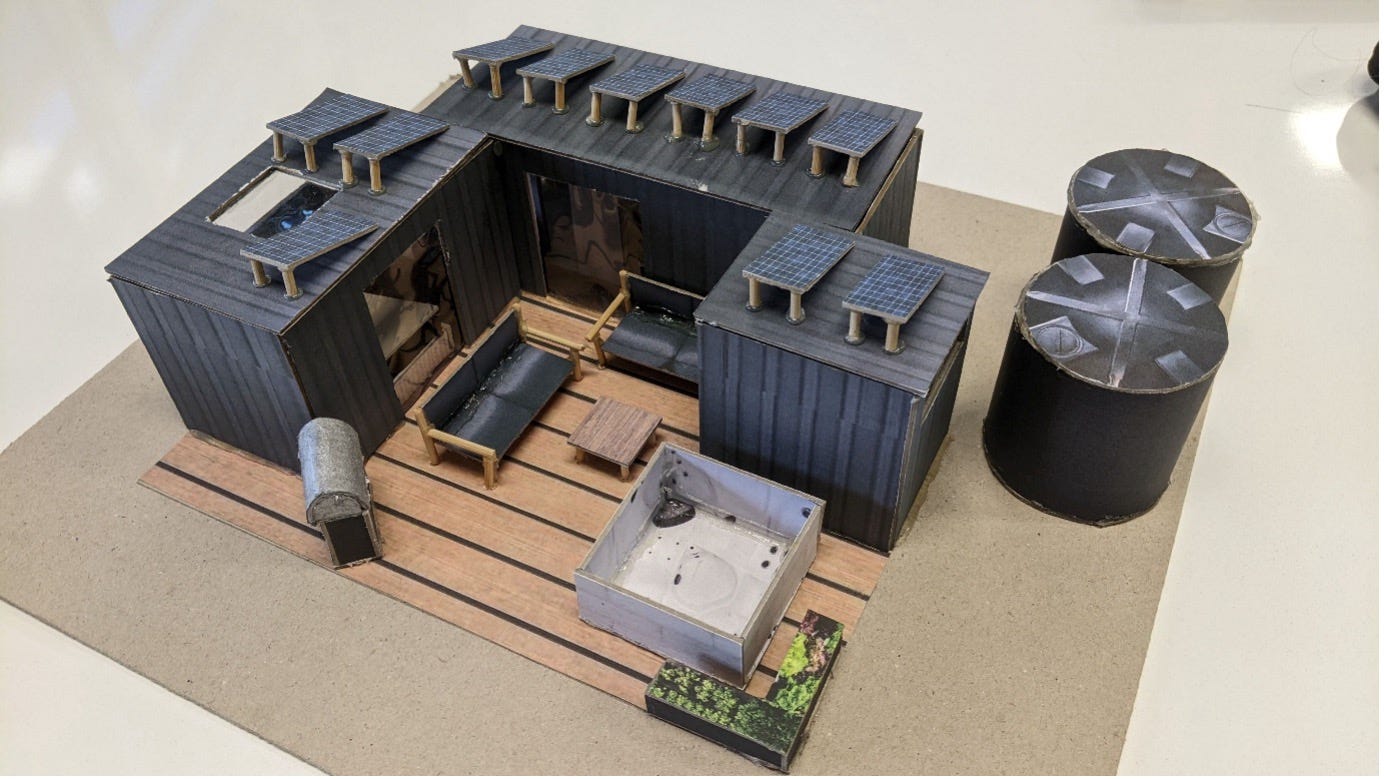
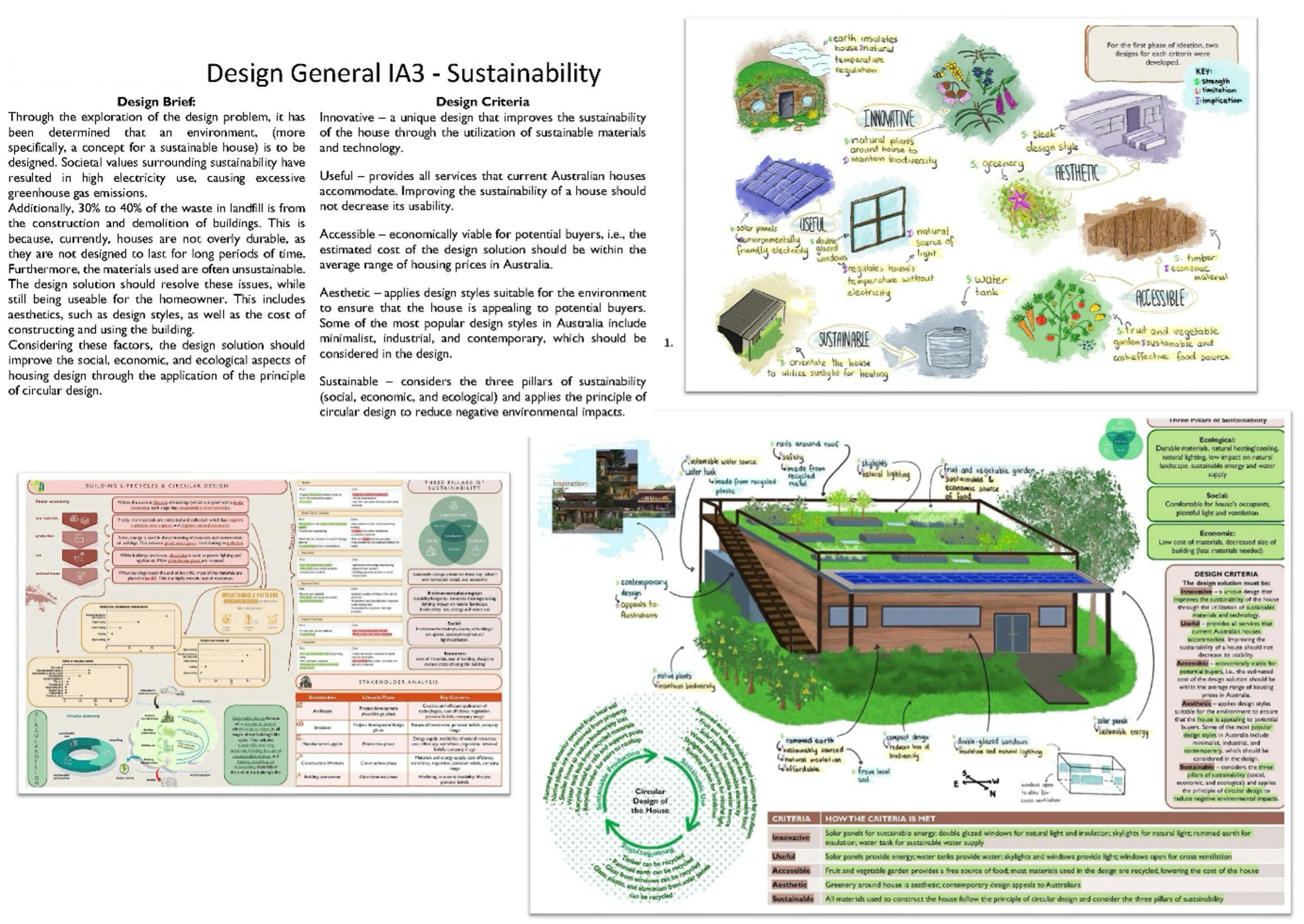
Fast forward to 2020, when I landed my first Design class: Year 9 Design and Technology. The unit challenged students to design a sustainable tiny home, combining design thinking with the creation of a scale model of their proposed solution. This class taught me many things.
It was my first introduction to 3D printers, laser cutters and engravers—and chaos. Lots of chaos. There were minor burns from hot-melt glue guns, multiple failed prints and plenty of laser-cutting problems. By the end of the unit, I was exhausted, but the students had produced their tiny home models and were proud to pitch their designs and explain to the class how they were sustainable. Success! The more I learnt about the equipment and refined my practice, the more intricate the students’ designs became.
As my confidence and understanding grew, I began to ask myself, ‘What’s next?’ That question led me to teaching Senior Design. It was a new process, yet it felt remarkably familiar. Recognising those similarities led me to investigate other design thinking models. Eventually, I felt a sense of calm as it finally hit me: Design can be approached in many ways, but its core is usually the same. Explore and investigate. Sketch and ideate. Refine and evaluate. Propose and pitch. Add different terminology or adapt the stages, and, suddenly, there is another design thinking model that could be marketed as the next big thing!
More importantly, understanding these different design models has helped me see the world through a design lens. Everything we interact with—our surroundings, the objects we use as teachers, and the tools that help us manage everyday life—has been designed. It is all design.
I find joy in explaining to my students how I see the world through this lens. Some are puzzled. Some don’t quite get it. Others arrive at the same conclusion, and for those students, I see a spark light up as they begin to dive into the world of design themselves.
They explore different design industries, marvel at the history of design and how far it has come, question the process and, in turn, make mistakes. But it is all part of the journey.
For me, design is never really about the outcome; it is about the journey we take to get there. As a teacher of Design, I watch students go around in circles. They develop ideas, sketch a little, write too much, sketch some more, go back to the drawing board, and research until they are hit with analysis paralysis. Eventually, they land on a solution they are finally happy with. Within all that chaos, the students see the outcome. What I see are the critical thinkers who will become the next generation of innovators.
That is why I teach Design. Design is messy, and it will always be messy. But once students learn to embrace that messiness—to question, explore, make mistakes, refine their thinking and try again—they begin to see the world differently.
They begin to find their own design lens.
About the Author: Jamie Lay
As an IDT Coordinator, STEMx and Industrial Design Technology Teacher at a busy Brisbane State High School, and Secretary of the Design and Technologies Teachers Association (DATTA), Queensland branch, Jamie epitomises what it means to be a designerly teacher. Recently Jamie was named a recipient of the 2026 Peter Doherty Outstanding Teacher of STEM Award for his contribution to STEM education in Queensland.